CkPython Requires Chilkat v10.1.3+
CkPython
Datev OAuth2 Access Token
See more Datev Examples
Demonstrates how to get a Datev OAuth2 access token from a desktop application or script.Chilkat CkPython Downloads
import sys
import chilkat
success = False
# To further clarify, see OAuth 2.0 Authorization Flow
oauth2 = chilkat.CkOAuth2()
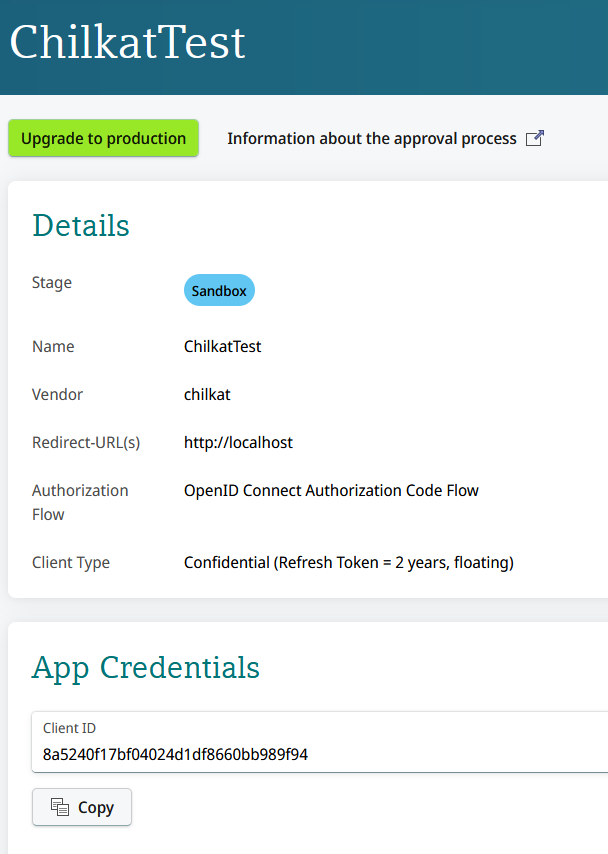
# Your Datev app should use "http://localhost" (no trailing forward slash) for the redirect URL.
oauth2.put_ListenPort(3017)
#  oauth2.put_AuthorizationEndpoint("https://login.datev.de/openidsandbox/authorize")
oauth2.put_TokenEndpoint("https://sandbox-api.datev.de/token")
# Replace this with your actual client ID.
oauth2.put_ClientId("DATEV_CLIENT_ID")
oauth2.put_ClientSecret("DATEV_CLIENT_SECRET")
oauth2.put_CodeChallenge(True)
oauth2.put_CodeChallengeMethod("S256")
oauth2.put_Scope("openid profile email datev:accounting:clients accounting:documents datev:accounting:extf-files-import")
# Begin the OAuth2 authorization code flow. This returns a URL that should be loaded in a browser.
url = oauth2.startAuth()
if (oauth2.get_LastMethodSuccess() != True):
print(oauth2.lastErrorText())
sys.exit()
# Launch the default browser on the system and navigate to the url.
# The LaunchBrowser method was added in Chilkat v10.1.2.
success = oauth2.LaunchBrowser(url)
if (success == False):
print(oauth2.lastErrorText())
sys.exit()
# Wait for the interactive user to grant permission in the interactive browser session.
# We'll wait for a max of 90 seconds.
numMsWaited = 0
while (numMsWaited < 90000) and (oauth2.get_AuthFlowState() < 3) :
oauth2.SleepMs(100)
numMsWaited = numMsWaited + 100
# If there was no response from the browser within 90 seconds, then
# the AuthFlowState will be equal to 1 or 2.
# 1: Waiting for Redirect. The OAuth2 background thread is waiting to receive the redirect HTTP request from the browser.
# 2: Waiting for Final Response. The OAuth2 background thread is waiting for the final access token response.
# In that case, cancel the background task started in the call to StartAuth.
if (oauth2.get_AuthFlowState() < 3):
oauth2.Cancel()
print("No response from the browser!")
sys.exit()
# Check the AuthFlowState to see if authorization was granted, denied, or if some error occurred
# The possible AuthFlowState values are:
# 3: Completed with Success. The OAuth2 flow has completed, the background thread exited, and the successful JSON response is available in AccessTokenResponse property.
# 4: Completed with Access Denied. The OAuth2 flow has completed, the background thread exited, and the error JSON is available in AccessTokenResponse property.
# 5: Failed Prior to Completion. The OAuth2 flow failed to complete, the background thread exited, and the error information is available in the FailureInfo property.
if (oauth2.get_AuthFlowState() == 5):
print("OAuth2 failed to complete.")
print(oauth2.failureInfo())
sys.exit()
if (oauth2.get_AuthFlowState() == 4):
print("OAuth2 authorization was denied.")
print(oauth2.accessTokenResponse())
sys.exit()
if (oauth2.get_AuthFlowState() != 3):
print("Unexpected AuthFlowState:" + str(oauth2.get_AuthFlowState()))
sys.exit()
# Save the full JSON access token response to a file.
sbJson = chilkat.CkStringBuilder()
sbJson.Append(oauth2.accessTokenResponse())
sbJson.WriteFile("qa_data/tokens/datev.json","utf-8",False)
# The saved JSON response looks like this:
# {
# "refresh_token": "ZDA5Y .... FFhTXc9",
# "refresh_token_expires_in": 39600,
# "id_token": "eyJ .... Q9w",
# "access_token": "MTM .... 1UDA9",
# "token_type": "bearer",
# "expires_in": 900
# }
print("OAuth2 authorization granted!")
print("Access Token = " + oauth2.accessToken())
oauth2.put_AuthorizationEndpoint("https://login.datev.de/openidsandbox/authorize")
oauth2.put_TokenEndpoint("https://sandbox-api.datev.de/token")
# Replace this with your actual client ID.
oauth2.put_ClientId("DATEV_CLIENT_ID")
oauth2.put_ClientSecret("DATEV_CLIENT_SECRET")
oauth2.put_CodeChallenge(True)
oauth2.put_CodeChallengeMethod("S256")
oauth2.put_Scope("openid profile email datev:accounting:clients accounting:documents datev:accounting:extf-files-import")
# Begin the OAuth2 authorization code flow. This returns a URL that should be loaded in a browser.
url = oauth2.startAuth()
if (oauth2.get_LastMethodSuccess() != True):
print(oauth2.lastErrorText())
sys.exit()
# Launch the default browser on the system and navigate to the url.
# The LaunchBrowser method was added in Chilkat v10.1.2.
success = oauth2.LaunchBrowser(url)
if (success == False):
print(oauth2.lastErrorText())
sys.exit()
# Wait for the interactive user to grant permission in the interactive browser session.
# We'll wait for a max of 90 seconds.
numMsWaited = 0
while (numMsWaited < 90000) and (oauth2.get_AuthFlowState() < 3) :
oauth2.SleepMs(100)
numMsWaited = numMsWaited + 100
# If there was no response from the browser within 90 seconds, then
# the AuthFlowState will be equal to 1 or 2.
# 1: Waiting for Redirect. The OAuth2 background thread is waiting to receive the redirect HTTP request from the browser.
# 2: Waiting for Final Response. The OAuth2 background thread is waiting for the final access token response.
# In that case, cancel the background task started in the call to StartAuth.
if (oauth2.get_AuthFlowState() < 3):
oauth2.Cancel()
print("No response from the browser!")
sys.exit()
# Check the AuthFlowState to see if authorization was granted, denied, or if some error occurred
# The possible AuthFlowState values are:
# 3: Completed with Success. The OAuth2 flow has completed, the background thread exited, and the successful JSON response is available in AccessTokenResponse property.
# 4: Completed with Access Denied. The OAuth2 flow has completed, the background thread exited, and the error JSON is available in AccessTokenResponse property.
# 5: Failed Prior to Completion. The OAuth2 flow failed to complete, the background thread exited, and the error information is available in the FailureInfo property.
if (oauth2.get_AuthFlowState() == 5):
print("OAuth2 failed to complete.")
print(oauth2.failureInfo())
sys.exit()
if (oauth2.get_AuthFlowState() == 4):
print("OAuth2 authorization was denied.")
print(oauth2.accessTokenResponse())
sys.exit()
if (oauth2.get_AuthFlowState() != 3):
print("Unexpected AuthFlowState:" + str(oauth2.get_AuthFlowState()))
sys.exit()
# Save the full JSON access token response to a file.
sbJson = chilkat.CkStringBuilder()
sbJson.Append(oauth2.accessTokenResponse())
sbJson.WriteFile("qa_data/tokens/datev.json","utf-8",False)
# The saved JSON response looks like this:
# {
# "refresh_token": "ZDA5Y .... FFhTXc9",
# "refresh_token_expires_in": 39600,
# "id_token": "eyJ .... Q9w",
# "access_token": "MTM .... 1UDA9",
# "token_type": "bearer",
# "expires_in": 900
# }
print("OAuth2 authorization granted!")
print("Access Token = " + oauth2.accessToken())