PHP ActiveX
PHP ActiveX
Oracle Cloud Secrets - Create or Update a Binary Secret
See more Secrets Examples
Demonstrates how to create or update a binary secret stored in the Oracle Cloud Secrets.Note: This example requires Chilkat v10.1.0 or later.
Chilkat PHP ActiveX Downloads
<?php
$success = 0;
// This example requires the Chilkat API to have been previously unlocked.
// See Global Unlock Sample for sample code.
// The bootstrap secret will contain the following information:
// Private Key PEM
// See following examples for setting up a bootstrap secret in memory,
// or in the local manager (Windows Credentials Manager or Apple Keychain)
// Setup Bootstrap Secret in Local Manager
// Setup Bootstrap Secret in Memory
$bootstrap = new COM("Chilkat.Secrets");
// Set the location of the bootstrap secret.
// Can be "local_manager" or "memory", depending on how you setup the bootstrap secret.
// ---------------------------------------------------------------------------------------------
// If your operating system is NOT Windows or MacOS/iOS, then change "local_manager" to "memory"
// You can also, if desired, use "memory" on Windows and MacOS/iOS if your bootstrap secret was previously setup in memory.
// ---------------------------------------------------------------------------------------------
$bootstrap->Location = 'local_manager';
// Specify the bootstrap secret to be used.
$bsId = new COM("Chilkat.JsonObject");
$bsId->UpdateString('appName','oracle_bs');
$bsId->UpdateString('service','Example');
$bsId->UpdateString('username','Joe');
// ----------------------------------------------------
$secrets = new COM("Chilkat.Secrets");
// Setup for the Oracle Cloud Secrets
$secrets->Location = 'oracle_cloud';
$success = $secrets->SetBootstrapSecret($bsId,$bootstrap);
if ($success == 0) {
print $secrets->LastErrorText . "\n";
exit;
}
// Specify the name of the secret.
// service and username are required.
// appName and domain are optional.
// Note: The values are arbitrary and can be anything you want.
$json = new COM("Chilkat.JsonObject");
$json->UpdateString('appName','Test2');
$json->UpdateString('service','Custom');
$json->UpdateString('domain','Ocean');
$json->UpdateString('username','Starfish');
// Oracle Cloud Secrets requires a lot of additional information for each API call.
// You'll need to replace the following with your values.
// Note: To learn how to find these values, go to an AI such as ChatGPT and ask (for example) "In Oracle Cloud, where do I find my master key OCID?"
$json->UpdateString('vault_name','ocid1.vault.oc1.us-chicago-1.ijttzlz7aadxo.abxxeljt4gv6tgrar66i5ugffincjmp52oveht3y2zn74rgo6raz6h72qtia');
$json->UpdateString('region','us-chicago-1');
$json->UpdateString('tenancy_ocid','ocid1.tenancy.oc1..aaaaaaaaov6vd3xdybgvwblezx2kmgjmo3dvsuljbwpf2m27mk47kkxsa5aa');
$json->UpdateString('user_ocid','ocid1.user.oc1..aaaaaaaarsn42gwcl5rvahcmt5r6aheek65z54k5nbd6gtclmqn6emkqxajq');
$json->UpdateString('master_key_ocid','ocid1.key.oc1.us-chicago-1.ijttzlz7aadxo.abxyeljtfbqhl5h2velmojmm6ls77lskmc7ardpekjgw264my6fuyxmhm6xa');
// The purpose of this example is to show how arbitrary binary data
// can be stored as a secret.
// We'll use a small JPG image that is approximately 6KB in size.
// You can test using this same JPG at this URL:
$url = 'https://chilkatdownload.com/sample_data/starfish.jpg';
$http = new COM("Chilkat.Http");
$bd = new COM("Chilkat.BinData");
$success = $http->DownloadBd($url,$bd);
if ($success == 0) {
print $http->LastErrorText . "\n";
exit;
}
// Create or update the binary secret.
$success = $secrets->UpdateSecretBd($json,$bd);
if ($success == 0) {
print $secrets->LastErrorText . "\n";
exit;
}
print 'Success.' . "\n";
// Here you can see the secret that was created in the Oracle Cloud Secrets:
// 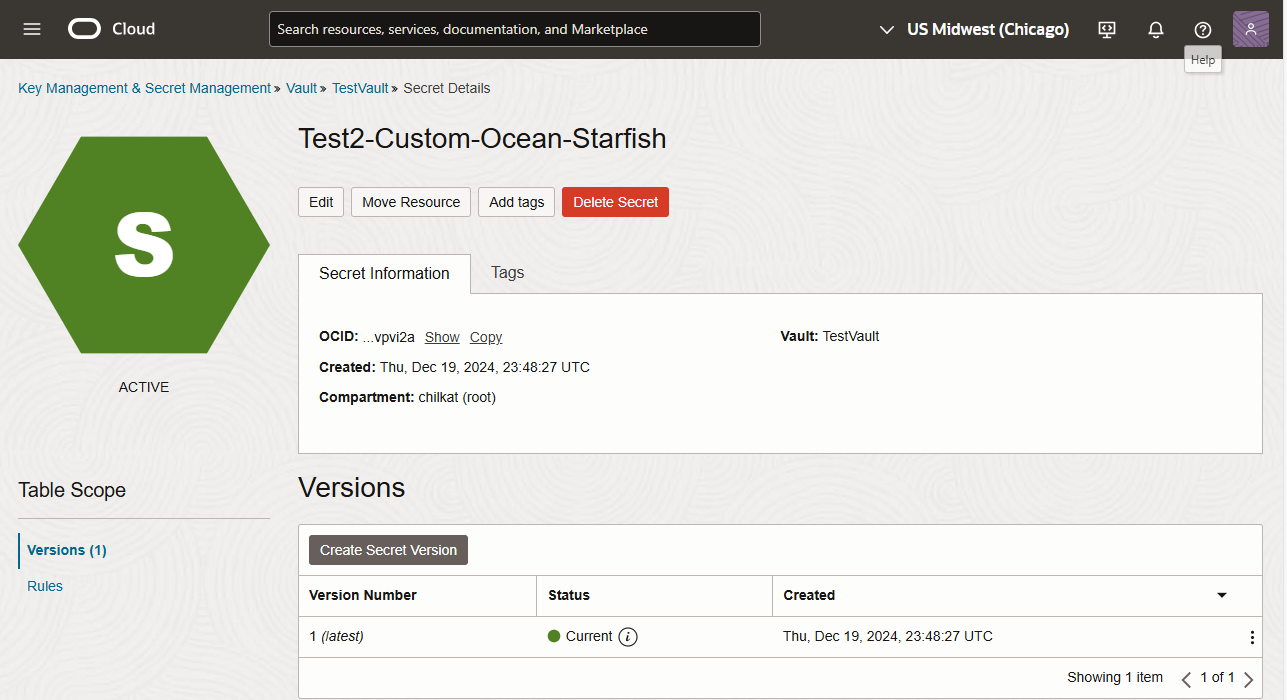 ?>
?>