Android™
Android™
Create CAdES p7m using Azure Key Vault to Sign in the Cloud
See more Signing in the Cloud Examples
Demonstrates how to create a CAdES p7m, using Azure Key Vault. The signing of the hash happens in the Cloud on Azure Key Vault. Everything else regarding the creation of CAdES happens locally within Chilkat.Note: This example requires Chilkat v9.5.0.96 or greater.
Chilkat Android™ Downloads
// Important: Don't forget to include the call to System.loadLibrary
// as shown at the bottom of this code sample.
package com.test;
import android.app.Activity;
import com.chilkatsoft.*;
import android.widget.TextView;
import android.os.Bundle;
public class SimpleActivity extends Activity {
private static final String TAG = "Chilkat";
// Called when the activity is first created.
@Override
public void onCreate(Bundle savedInstanceState) {
super.onCreate(savedInstanceState);
boolean success = false;
// This example assumes the Chilkat API to have been previously unlocked.
// See Global Unlock Sample for sample code.
// Load the certificate used for signing. The certificate's private key is stored in
// the Azure Key Vault.
// However, we still need the certificate locally (without private key).
CkCert cert = new CkCert();
success = cert.LoadFromFile("qa_data/certs/myCert.cer");
if (success == false) {
Log.i(TAG, cert.lastErrorText());
return;
}
// Here's a screenshot of our certificate with private key on Azure Key Vault:
// 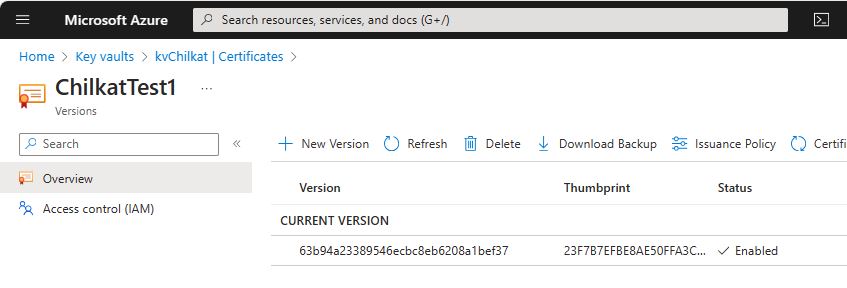 // To sign using the Azure Key Vault,
// add the following lines of code to specify your authentication credentials,
// and the name of the certificate w/ private key on the Azure server to be used.
CkJsonObject jsonAzure = new CkJsonObject();
// Set the "service" equal to "azure_keyvault" to tell Chilkat to use Azure Key Vault for signing.
jsonAzure.UpdateString("service","azure_keyvault");
jsonAzure.UpdateString("client_id","APP_ID");
jsonAzure.UpdateString("client_secret","APP_PASSWORD");
jsonAzure.UpdateString("tenant_id","TENANT_ID");
// In the above screenshot, our vault name is "kvchilkat". You will use your vault name.
jsonAzure.UpdateString("vault_name","VAULT_NAME");
// In the above screenshot, our cert name is "ChilkatTest1". You will use your cert name.
jsonAzure.UpdateString("cert_name","CERT_NAME");
// In the above screenshot, our cert version is "63b94a23389546ecbc8eb6208a1bef37". You will use your cert version.
jsonAzure.UpdateString("cert_version","CERT_VERSION");
success = cert.SetCloudSigner(jsonAzure);
CkCrypt2 crypt = new CkCrypt2();
success = crypt.SetSigningCert(cert);
if (success == false) {
Log.i(TAG, crypt.lastErrorText());
return;
}
// The CadesEnabled property applies to all methods that create PKCS7 signatures.
// To create a CAdES-BES signature, set this property equal to true.
crypt.put_CadesEnabled(true);
crypt.put_HashAlgorithm("sha256");
CkJsonObject signedAttrs = new CkJsonObject();
signedAttrs.UpdateInt("contentType",1);
signedAttrs.UpdateInt("signingTime",1);
signedAttrs.UpdateInt("messageDigest",1);
signedAttrs.UpdateInt("signingCertificateV2",1);
crypt.put_SigningAttributes(signedAttrs.emit());
// You can sign any type of file..
String inputXmlPath = "qa_data/e-Invoice.xml";
String outputP7mPath = "qa_output/signed.p7m";
// Create the CAdES-BES attached signature, which contains the original data.
// Chilkat will build the .p7m locally, but will (internally) use ARSS
// to do the RSA signing remotely.
success = crypt.CreateP7M(inputXmlPath,outputP7mPath);
if (success == false) {
Log.i(TAG, crypt.lastErrorText());
return;
}
Log.i(TAG, "Success.");
}
static {
System.loadLibrary("chilkat");
// Note: If the incorrect library name is passed to System.loadLibrary,
// then you will see the following error message at application startup:
//"The application <your-application-name> has stopped unexpectedly. Please try again."
}
}
// To sign using the Azure Key Vault,
// add the following lines of code to specify your authentication credentials,
// and the name of the certificate w/ private key on the Azure server to be used.
CkJsonObject jsonAzure = new CkJsonObject();
// Set the "service" equal to "azure_keyvault" to tell Chilkat to use Azure Key Vault for signing.
jsonAzure.UpdateString("service","azure_keyvault");
jsonAzure.UpdateString("client_id","APP_ID");
jsonAzure.UpdateString("client_secret","APP_PASSWORD");
jsonAzure.UpdateString("tenant_id","TENANT_ID");
// In the above screenshot, our vault name is "kvchilkat". You will use your vault name.
jsonAzure.UpdateString("vault_name","VAULT_NAME");
// In the above screenshot, our cert name is "ChilkatTest1". You will use your cert name.
jsonAzure.UpdateString("cert_name","CERT_NAME");
// In the above screenshot, our cert version is "63b94a23389546ecbc8eb6208a1bef37". You will use your cert version.
jsonAzure.UpdateString("cert_version","CERT_VERSION");
success = cert.SetCloudSigner(jsonAzure);
CkCrypt2 crypt = new CkCrypt2();
success = crypt.SetSigningCert(cert);
if (success == false) {
Log.i(TAG, crypt.lastErrorText());
return;
}
// The CadesEnabled property applies to all methods that create PKCS7 signatures.
// To create a CAdES-BES signature, set this property equal to true.
crypt.put_CadesEnabled(true);
crypt.put_HashAlgorithm("sha256");
CkJsonObject signedAttrs = new CkJsonObject();
signedAttrs.UpdateInt("contentType",1);
signedAttrs.UpdateInt("signingTime",1);
signedAttrs.UpdateInt("messageDigest",1);
signedAttrs.UpdateInt("signingCertificateV2",1);
crypt.put_SigningAttributes(signedAttrs.emit());
// You can sign any type of file..
String inputXmlPath = "qa_data/e-Invoice.xml";
String outputP7mPath = "qa_output/signed.p7m";
// Create the CAdES-BES attached signature, which contains the original data.
// Chilkat will build the .p7m locally, but will (internally) use ARSS
// to do the RSA signing remotely.
success = crypt.CreateP7M(inputXmlPath,outputP7mPath);
if (success == false) {
Log.i(TAG, crypt.lastErrorText());
return;
}
Log.i(TAG, "Success.");
}
static {
System.loadLibrary("chilkat");
// Note: If the incorrect library name is passed to System.loadLibrary,
// then you will see the following error message at application startup:
//"The application <your-application-name> has stopped unexpectedly. Please try again."
}
}